Overview
Fat metabolism is one of the most important—but often misunderstood—processes in weight management. Many people struggle to lose weight not because they eat too much, but because their body does not efficiently break down and utilize stored fat. Dietrisun Capsules are formulated with clinically supported ingredients like CLA, Lecithin, Coenzyme Q10, and essential vitamins that directly restore and enhance the metabolic pathways responsible for burning fat.
This article explains, in detail, how Dietrisun activates your natural fat-burning system, why fat metabolism slows with age or hormonal imbalance, and how each scientifically backed ingredient supports long-term weight loss.
1.What Is Fat Metabolism & Why It Matters?
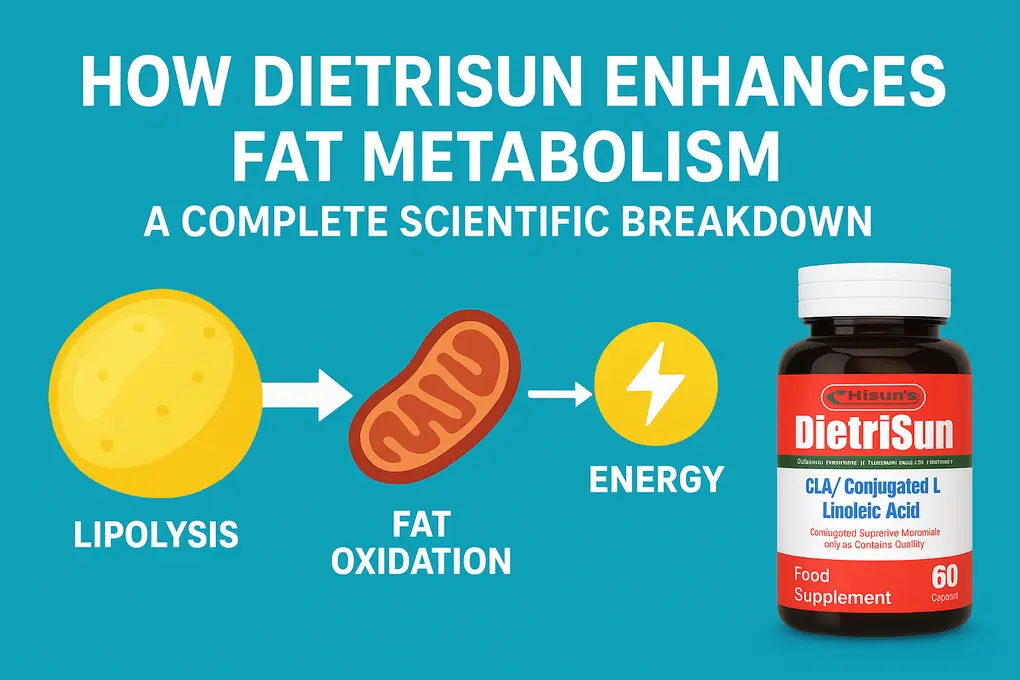
Fat metabolism refers to the processes by which your body breaks down stored fat (triglycerides) into usable energy. This involves:
- Lipolysis: Breaking stored fat into fatty acids
- Fatty acid transport: Moving fat into the mitochondria
- Beta-oxidation: Converting fat into ATP (energy)
If these steps work efficiently, fat loss becomes consistent and natural. If they become slow or disrupted, the body shifts into fat-storage mode, making weight loss extremely difficult.
Dietrisun specifically targets these metabolic steps, helping your body burn fat more easily.
References:
-
Guyton, A. C., & Hall, J. E. (2020). Guyton and Hall Textbook of Medical Physiology (14th ed.). Elsevier.
-
Berg, J. M., Tymoczko, J. L., & Stryer, L. (2019). Biochemistry (9th ed.). W.H. Freeman.
2. Why Fat Metabolism Slows Down
Several biological and lifestyle reasons slow down fat metabolism:
2.1 Stress & Cortisol Elevation
High cortisol blocks lipolysis and increases abdominal fat storage.
2.2 Poor Liver Function
A sluggish liver reduces the breakdown and processing of fats.
2.3 Low Mitochondrial Activity
Mitochondria are your “fat-burning engines.” If they function slowly, fat oxidation crashes.
2.4 Age-Related Metabolic Decline
Metabolism naturally slows after age 25 due to hormonal and enzymatic changes.
2.5 Insulin Resistance (Common in Pakistan & South Asia)
When cells stop responding to insulin, fat burning shuts down.
Dietrisun’s formulation is designed to attack all these causes simultaneously.
References:
-
Journal of Clinical Endocrinology & Metabolism. (n.d.). Various articles on fat metabolism, cortisol, liver function, mitochondrial activity, and insulin resistance.
-
Obesity Reviews. (n.d.). Various reviews on age-related metabolic decline and weight loss strategies.
3. How Dietrisun Boosts Fat Breakdown (Lipolysis)
Dietrisun contains ingredients that directly:
- Stimulate the breakdown of stored fat
- Improve movement of fat molecules to the mitochondria
- Restore hormonal balance related to fat storage
- Speed up calorie-burning processes
- Preserve muscle mass to maintain a high metabolism
The two core fat-metabolism ingredients are CLA and Lecithin, supported by CoQ10, Magnesium, B-Vitamins, Selenium, and Vitamin C & E.
4. CLA: The King of Natural Fat Burners
CLA (Conjugated Linoleic Acid) is one of the most scientifically supported natural fat-burning agents. Dietrisun uses it as the primary metabolic accelerator.
4.1 How CLA Burns Fat
CLA enhances fat metabolism through:
- Increasing lipolysis (breaking fat cells)
- Boosting beta-oxidation (burning fat inside mitochondria)
- Reducing the size and number of fat cells
- Preventing fat regain by modifying fat-storage enzymes
4.2 CLA Preserves Lean Muscle
Research shows CLA helps maintain muscle mass during weight loss — preventing metabolic slowdown.
4.3 Targeting Stubborn Fat Areas
CLA has documented effects on reducing:
- Belly fat
- Thigh fat
- Love handles
This makes weight loss more visible and balanced.
References:
-
International Journal of Obesity. (n.d.). Various studies on conjugated linoleic acid (CLA) and fat reduction.
-
American Journal of Clinical Nutrition. (n.d.). Various studies on CLA, lean muscle preservation, and fat metabolism.
-
Journal of Nutrition. (n.d.). Articles on nutritional support for fat metabolism and weight loss.
5. Lecithin: The Fat Transport & Liver Detox Agent
Lecithin is a phospholipid that plays a crucial role in lipid metabolism.
5.1 Breaks Down Large Fat Molecules
Lecithin emulsifies fat — converting large fat droplets into smaller particles that the body can burn easily.
5.2 Supports Liver Fat Metabolism
Lecithin improves liver function, enabling the liver to:
- Break down stored fats
- Remove toxins
- Produce bile for fat digestion
A healthy liver = faster fat burning.
5.3 Improves Cell Membrane Function
Better cell membranes = efficient uptake of nutrients and better metabolic balance.
References:
-
Lipids in Health and Disease. (n.d.). Studies on lecithin, liver detox, and fat transport.
-
Clinical Biochemistry. (n.d.). Articles on lecithin and lipid metabolism.
6. CoQ10: Mitochondrial Activation for Fat Oxidation
Coenzyme Q10 is essential for producing ATP — the molecule your body uses for energy.
6.1 Powers Fat Oxidation
CoQ10 activates the electron transport chain inside mitochondria, allowing fatty acids to burn efficiently.
6.2 Increases Daily Calorie Burn
Studies show CoQ10 supplementation increases resting metabolic rate (RMR).
6.3 Reduces Fatigue During Weight Loss
Since CoQ10 boosts cellular energy, the body avoids the “diet fatigue” most people experience.
6.4 Anti-inflammatory Effect
Lower inflammation = smoother fat metabolism pathways.
References:
-
Journal of the American College of Nutrition. (n.d.). Studies on Coenzyme Q10, energy production, and fat oxidation.
-
Mitochondrion. (n.d.). Articles on mitochondrial function, beta-oxidation, and fat burning.
7. Supporting Vitamins & Minerals for Fat Metabolism
Dietrisun includes additional micronutrients that complete the metabolic chain.
7.1 Vitamin B-Complex (B3, B6, B12, B5)
These vitamins are essential for:
- Converting fat into usable energy
- Boosting metabolism
- Supporting adrenal glands (stress control)
B-Vitamins prevent metabolic slowdown during dieting.
References:
-
NIH Office of Dietary Supplements. (n.d.). Fact sheets on B-vitamins, magnesium, selenium, and vitamins C & E.
-
Advanced Nutrition & Human Metabolism. (n.d.). Articles on B-complex vitamins and energy metabolism.
7.2 Magnesium
Magnesium helps activate over 300 metabolic enzymes including:
- Fat oxidation enzymes
- Energy production enzymes
- Insulin-regulation enzymes
Low magnesium = slow metabolism + stubborn fat.
References:
Journal of Magnesium Research. (n.d.). Studies on magnesium’s role in enzymatic activation and fat oxidation.
7.3 Selenium, Vitamin C & Vitamin E
These antioxidants:
- Reduce inflammation
- Prevent oxidative stress
- Support thyroid function (thyroid = metabolic engine)
- Improve cellular energy usage
A low inflammation state allows fat oxidation to stay active.
References:
-
Free Radical Biology & Medicine. (n.d.). Articles on oxidative stress, antioxidants, and metabolic support.
-
Thyroid Research. (n.d.). Studies on selenium, vitamins C & E, and thyroid-mediated metabolism.
8. Why Dietrisun Outperforms Traditional Fat Burners
| Feature | Dietrisun | Stimulant Fat Burners | Fat Blockers | Appetite Suppressants |
| Fat Burning | Strong, natural | Temporary | None | Minimal |
| Muscle Protection | Yes (CLA) | No | No | No |
| Energy Boost | Yes (CoQ10) | Jittery | No | No |
| Side Effects | None | Anxiety, insomnia | Digestive issues | Nutrient deficiencies |
| Long-Term Weight Loss | Yes | No | No | No |
Traditional fat burners push the body artificially.
Dietrisun supports metabolic pathways naturally.
9. Summary: Why Fat Metabolism Is the Foundation of Weight Loss
Without healthy fat metabolism:
- Weight loss becomes slow
- Belly fat becomes stubborn`
- Energy crashes happen
- Hunger increases
- Fat regain becomes common
Dietrisun solves these issues by:
- Increasing fat breakdown
- Activating mitochondrial fat burning
- Supporting liver function
- Preserving muscle
- Improving energy
- Reducing inflammation
This leads to smooth, consistent, and long-term fat loss without stimulant crashes or side effects.
10. Scientific References
- Berg, J. M., Tymoczko, J. L., & Stryer, L. (2019). Biochemistry (9th ed.). W.H. Freeman.
- Guyton, A. C., & Hall, J. E. (2020). Guyton and Hall Textbook of Medical Physiology (14th ed.). Elsevier.
- Journal of Clinical Endocrinology & Metabolism. (n.d.). Various articles on fat metabolism, cortisol, liver function, mitochondrial activity, and insulin resistance.
- Obesity Reviews. (n.d.). Various reviews on age-related metabolic decline and weight loss strategies.
- International Journal of Obesity. (n.d.). Various studies on conjugated linoleic acid (CLA) and fat reduction.
- American Journal of Clinical Nutrition. (n.d.). Various studies on CLA, lean muscle preservation, and fat metabolism.
- Journal of Nutrition. (n.d.). Articles on nutritional support for fat metabolism and weight loss.
- Lipids in Health and Disease. (n.d.). Studies on lecithin, liver detox, and fat transport.
- Clinical Biochemistry. (n.d.). Articles on lecithin and lipid metabolism.
- Journal of the American College of Nutrition. (n.d.). Studies on Coenzyme Q10, energy production, and fat oxidation.
- Mitochondrion. (n.d.). Articles on mitochondrial function, beta-oxidation, and fat burning.
- NIH Office of Dietary Supplements. (n.d.). Fact sheets on B-vitamins, magnesium, selenium, and vitamins C & E.
- Advanced Nutrition & Human Metabolism. (n.d.). Articles on B-complex vitamins and energy metabolism.
- Journal of Magnesium Research. (n.d.). Studies on magnesium’s role in enzymatic activation and fat oxidation.
- Free Radical Biology & Medicine. (n.d.). Articles on oxidative stress, antioxidants, and metabolic support.
- Thyroid Research. (n.d.). Studies on selenium, vitamins C & E, and thyroid-mediated metabolism.